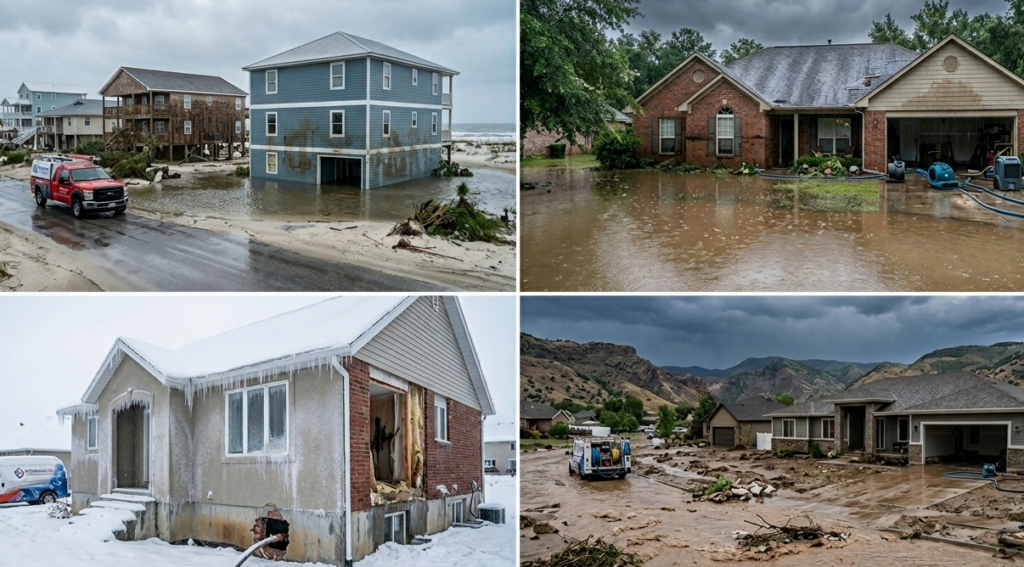
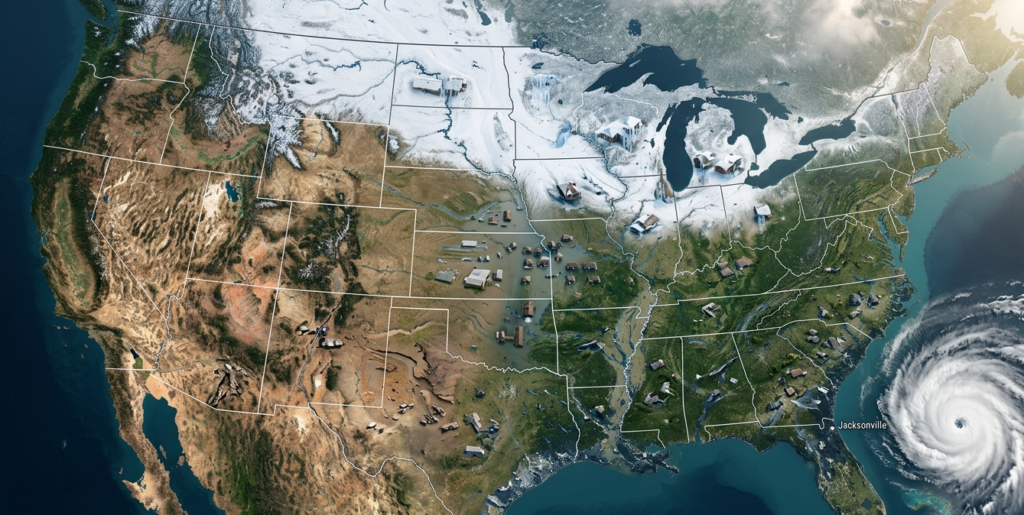
Water damage is one of the most common and costly home disasters in the United States – but how restoration professionals respond to it varies dramatically depending on where you live. The climate, building materials, local regulations, and even the type of water event most common to a region all shape what a successful restoration looks like. As a national restoration network, we work with certified specialists across the country and see these differences firsthand.
Here’s a region-by-region breakdown of how water damage response differs – and why local expertise matters as much as technical training.
Mid-Atlantic (Virginia, Maryland, DC Metro)
Our home base in Sterling, VA sits in one of the most variable climate zones in the country. Mid-Atlantic homeowners face water damage from multiple sources: summer thunderstorms, nor’easters, hurricane remnants tracking up the coast, and winter ice damming on older rooftops.
The most common structural challenge in this region is crawl-space moisture intrusion. A large percentage of Virginia and Maryland homes sit on crawl-space foundations – and when ground saturation rises after heavy rain events, moisture wicks upward into subfloor assemblies and lower wall framing in ways that don’t produce visible flooding but create ideal mold conditions within 48 hours.
Response priority in the Mid-Atlantic: crawl space inspection and vapor barrier integrity should always be assessed alongside any above-grade water damage event.
Key authority: Virginia Department of Emergency Management – Flood Preparedness
Southeast (Florida, Georgia, Carolinas)
The Southeast combines two risk factors that make water damage particularly aggressive: high ambient humidity year-round and regular exposure to hurricane and tropical storm events. In subtropical climates, the mold initiation window compresses to 24 hours or less – compared to 48–72 hours in drier inland markets.
Construction in coastal Florida also presents unique challenges. Concrete block (CBS) construction absorbs water into the masonry itself, requiring drying cycle extensions of 2–3x what wood-frame structures need. Pre-1980 homes throughout the region frequently contain asbestos-bearing materials that become a remediation concern the moment flood damage forces demolition.
The Southeast also leads the country in NFIP (National Flood Insurance Program) claim volume, meaning restoration contractors here must be fluent in FEMA documentation requirements – not just IICRC drying protocols.
Great Lakes Region (Ohio, Michigan, Illinois, Indiana)
The Great Lakes states present a restoration environment defined by two seasonal extremes: brutal winters that cause pipe failures and ice-related roof damage, and humid summers that make structural drying slower than in drier climates.
Ohio in particular sits in a zone where freeze-thaw cycling is a primary driver of building envelope failures. Water gets into masonry cracks during autumn, freezes and expands in winter, and creates pathways for bulk water intrusion during spring thaw. Homeowners often don’t discover the damage until spring when visible water appears in basements and wall cavities – by which point weeks of slow moisture migration have already affected framing and insulation.
Lake Erie’s influence on Northeast Ohio creates another layer of risk: lake-effect snow events can deposit 12–24 inches of snow within hours, and the rapid melt that follows saturates ground and overwhelms drainage systems simultaneously. Basement flooding from hydrostatic pressure is endemic to the Cleveland metro area after these events.
For Great Lakes homeowners dealing with post-winter water intrusion or storm flooding, certified specialists in the region understand these failure patterns in a way that generalist contractors don’t. Cleveland water damage restoration providers, for example, are structured specifically for rapid basement extraction and freeze-thaw structural assessment – capabilities that reflect Northeast Ohio’s distinct seasonal risk profile.
Pacific Northwest (Washington, Oregon)
The Pacific Northwest faces a sustained, low-intensity moisture problem rather than episodic flooding events. Annual rainfall in western Washington and Oregon is not dramatically high by volume — but it falls over 8–9 months of the year, keeping ground saturation elevated and building envelopes under constant low-level stress.
The result is a regional pattern of slow, hidden water intrusion: moisture working through window flashing failures, siding lap joints, and foundation cracks over years rather than hours. By the time visible damage appears inside a Pacific Northwest home, the moisture has typically been present in wall cavities for months – and mold remediation scope is substantially larger than in acute flood events.
Restoration in this market is heavily weighted toward moisture investigation and source identification before any drying work begins, because treating visible symptoms without finding the long-term intrusion pathway produces recurring damage.
Southwest (Arizona, Nevada, Southern California)
The Southwest presents the opposite climate challenge: extremely low ambient humidity that can actually mask moisture damage. In markets like Phoenix and Las Vegas, materials dry so rapidly that moisture readings can appear normal within days of an event – while trapped moisture behind tile and under slabs continues to support mold growth in the microclimate of an enclosed wall cavity.
Flash flooding is the primary acute event in this region – desert soils have low absorption capacity, and monsoon rainfall overwhelms drainage systems rapidly. Properties in floodplain-adjacent areas of Phoenix, Tucson, and Albuquerque can take on significant water with very little warning.
The Southwest also has a high prevalence of slab-on-grade construction, making slab leaks and under-slab moisture events particularly common and particularly disruptive to remediate.
What All Regions Share: The IICRC Standard
Regardless of geography, every professional water damage restoration company in the United States should be operating to the IICRC S500 Standard for Professional Water Damage Restoration. This standard sets drying goals, documentation requirements, moisture content targets for each material class, and protocols for contamination category assessment.
When evaluating any restoration contractor – in Sterling, VA or anywhere else in the country – IICRC certification and the ability to produce daily drying logs and a final moisture clearance certificate are the baseline requirements that separate professional remediation from surface-level cleanup.
Why Local Knowledge Matters
The IICRC standard is national. Climate, construction, and risk patterns are local. The best restoration outcomes happen when certified technical expertise meets genuine regional knowledge – contractors who have seen hundreds of jobs in their specific market and understand the failure patterns, building materials, and seasonal risk factors that make their area different from everywhere else.
That’s why we maintain relationships with certified restoration specialists in markets across the country – so homeowners who need a trusted referral outside our direct service area can connect with a qualified local team quickly.
ProTrust Water Damage Restoration serves Sterling, VA and the greater DC Metro area with 24/7 emergency response, flood extraction, structural drying, and mold remediation. IICRC-certified. Licensed and insured.
Leave a Reply