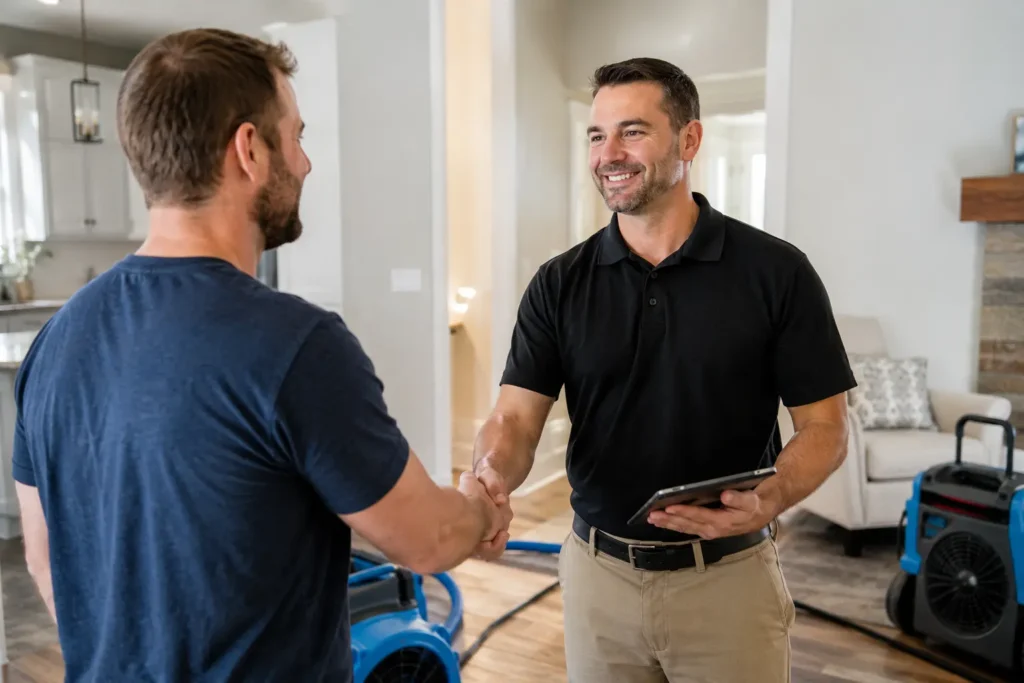
Choosing the right water damage restoration company is one of the most important decisions you will make after a flood or pipe burst – and most homeowners get it wrong because they are rushing. A pipe bursts, a basement floods, a storm pushes water through your roof and suddenly you are on the phone trying to figure out who to call while standing in two inches of water.
Most homeowners hire the first company they find. That decision alone is one of the most expensive mistakes you can make after a water event. The wrong company shows up late, misses hidden moisture, skips mold prevention, and leaves you with a repair bill your insurance refuses to cover.
This guide gives you 7 specific questions to ask any restoration company before you let them through your door – so you hire right the first time.
Why Choosing the Right Company Matters More Than You Think
The restoration industry is not heavily regulated in most states. Anyone with a van, a wet vacuum, and a website can call themselves a water damage restoration company. The difference between a certified professional and an unlicensed operator is not always obvious until the damage is already done – and by then, mold has started growing inside your walls.
A good restoration company does not just remove visible water. They identify hidden moisture pockets, treat for mold before it establishes, document everything for your insurance adjuster, and leave your home structurally sound. A bad one hands you a bill, disappears, and leaves moisture inside your walls to fester for months.
Asking the right questions upfront separates the professionals from the pretenders.
Question 1 – Are You Licensed, Insured, and IICRC Certified?
This is non-negotiable. Any legitimate water damage restoration company should be able to answer yes to all three without hesitation.
- Licensed – Confirms the company meets your state’s legal requirements to operate
- Insured – Protects you if a technician is injured in your home or causes additional damage during restoration
- IICRC Certified – The Institute of Inspection Cleaning and Restoration Certification sets the industry standard for water damage restoration. Technicians with IICRC credentials have been trained on proven methods for drying, dehumidification, and mold prevention
If a company cannot confirm IICRC certification, that is a significant red flag. Keep looking.
Question 2 – What Is Your Response Time?
In water damage situations, every hour matters – and a professional water damage restoration company should be ready to move the moment you call. The difference between a dry-out job and a full demolition often comes down to how quickly the restoration team arrived and started extraction.
Ask specifically:
- Do you offer 24/7 emergency response?
- What is your average arrival time for emergency calls in this area?
- Will you have equipment on site during the first visit or is the first visit just an assessment?
A company that cannot guarantee same-day arrival for an active water emergency is not set up to handle the urgency the situation demands. Response time is not a scheduling preference – it is a structural factor in how much your home will be damaged by the time drying begins.
Question 3 – Do You Work Directly With Insurance Companies?
Navigating an insurance claim after water damage is stressful enough without having to act as the middleman between your contractor and your adjuster. The best restoration companies handle insurance documentation as a core part of their service – not an afterthought.
Ask:
- Will you document the damage in a format my insurance adjuster can work with?
- Do you have experience working with major insurance carriers?
- Will you communicate directly with my adjuster or do I need to manage that relationship?
A company that has done this hundreds of times knows exactly what adjusters need to see. Their documentation alone can make the difference between a full payout and a partial settlement. Our insurance claim assistance service is specifically designed to take that burden off homeowners from the first call.
Question 4 – What Equipment Do You Use?
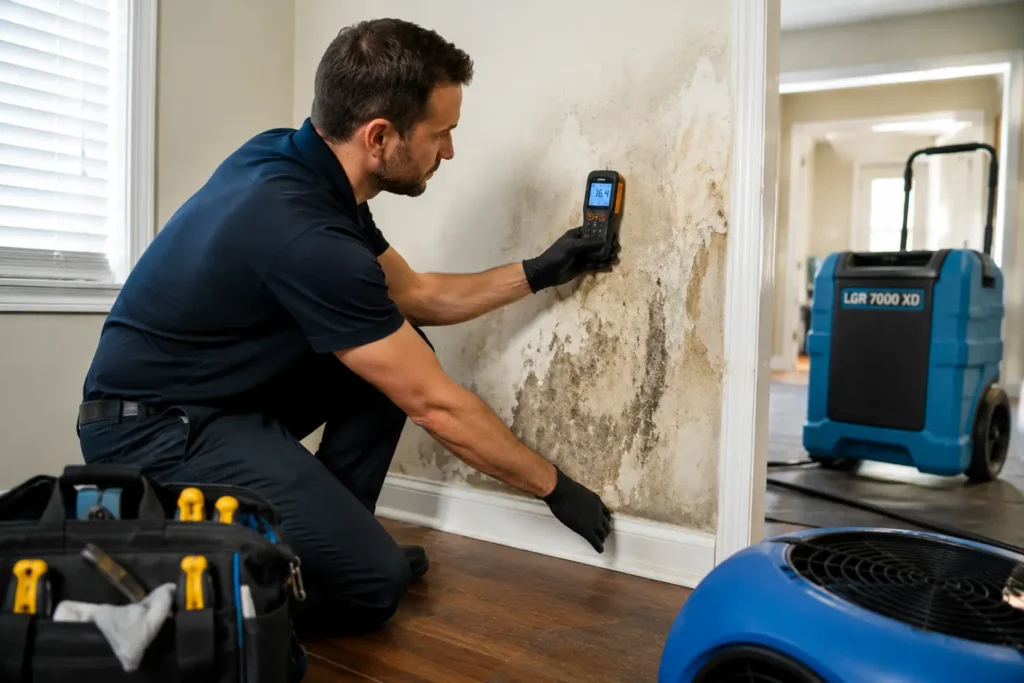
This question tells you immediately whether you are dealing with a professional operation or a budget outfit.
Professional restoration requires industrial-grade equipment – not the kind available at a hardware store rental counter. When a company arrives, their truck should carry:
- Industrial air movers – not box fans
- Desiccant or refrigerant dehumidifiers pulling 30–50 gallons per day
- Moisture meters for reading saturation inside walls without cutting them open
- Thermal imaging cameras to detect hidden moisture pockets
- Antimicrobial treatment solutions for mold prevention
If a company cannot describe their equipment specifically, or if they are relying on residential-grade tools, the drying process will take longer and leave moisture behind that triggers mold growth weeks after they leave.
Our emergency water extraction service deploys industrial equipment on every job – because anything less simply does not get the job done completely.
Question 5 – Can You Provide References or Verified Reviews?
A water damage restoration company worth hiring has a trail of satisfied customers willing to vouch for them. Before you sign anything, ask for:
- Google reviews – look for consistent ratings across a volume of reviews, not just a handful of five-star posts
- References from recent jobs similar in scope to yours
- Before and after documentation from previous water damage jobs
Be cautious of companies with only a few reviews, reviews that all appear on the same day, or companies that cannot produce any customer references on request. In an industry where trust is everything, a thin review profile is a warning sign.
Question 6 – Do You Handle Mold Prevention as Part of Restoration?
Water damage and mold are inseparable. Within 24–48 hours of a water event, mold spores begin colonizing wet surfaces. A restoration company that only addresses visible water – without treating for mold – is leaving the most expensive part of the job incomplete.
Ask directly:
- Do you apply antimicrobial treatment as part of the drying process?
- Do you test for mold before and after restoration?
- What happens if mold is discovered during the job?
If mold is already present, or if conditions are right for it to develop, you want a company equipped to handle full mold remediation services – not one that will refer you to a separate contractor and walk away.
Question 7 – Do You Have Local Experience in This Area?
Local knowledge matters more than most homeowners realize. A company that has worked in your specific region understands:
- Local building codes and permit requirements for restoration work
- Common water damage causes specific to your climate and geography
- Relationships with local insurance adjusters who know their documentation style
- Response time realities based on actual local infrastructure
A national franchise may have brand recognition – but a locally rooted company has ground-level knowledge that speeds up every phase of the job.
If you are in Central Illinois and need a restoration team with genuine local expertise, the team at Peoria water damage company has deep roots in the area and handles emergency response 24 hours a day across Peoria and surrounding communities.
Red Flags to Watch Out For
Even with the right questions asked, there are warning signs that should stop a hiring decision immediately:
- Demanding full payment upfront before any work begins
- Providing a verbal estimate only – no written scope of work
- Pressuring you to sign immediately without time to review
- Refusing to provide proof of insurance or certification
- Showing up without proper equipment or identification
Any legitimate water damage restoration company expects to be vetted. A company that reacts defensively to reasonable questions is not a company you want inside your home.
What to Remember Before You Make the Call
Choosing a water damage restoration company under pressure is difficult – but it is not something you should rush or skip entirely. Five minutes of questions upfront can save you from months of mold problems, insurance disputes, and structural issues that a rushed or unqualified restoration left behind.
Ask about licensing and certification. Ask about response time. Ask about equipment, insurance coordination, and mold prevention. And always check reviews before you commit.
For related reading, our post on 7 myths about water damage restoration debunked covers the most common misconceptions homeowners bring into the hiring process – worth reading before you make the call.
And if you want to understand what happens when water damage goes unaddressed, our guide on what happens to your home if you ignore water damage for 48 hours explains exactly why speed – and the right company – makes all the difference.
For Sterling, VA homeowners, our team is available 24/7 at (571) 561-3948. Call us before the damage gets worse.
Leave a Reply