
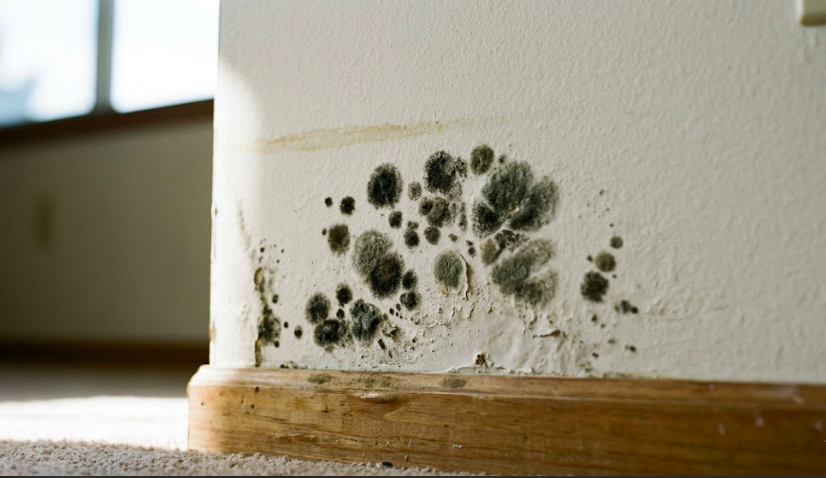
Water is one of the most destructive forces a home can face not because of its initial impact, but because of what it keeps doing after it arrives. A burst pipe, a flooded basement after a storm, or a slow leak behind your washing machine may seem manageable in the moment. You plan to deal with it “tomorrow.” You assume it will dry out on its own. You wait for a contractor to call back.
That decision to wait could be the most expensive one you ever make.
The clock on water damage doesn’t pause while you figure things out. Within a single 48-hour window, a containable cleanup transforms into a multi-stage remediation project that costs two to five times more and takes weeks to complete instead of days. This guide walks through exactly what happens inside your walls, floors, and ceilings at every stage, why the 48-hour mark is the critical threshold the restoration industry uses, and what you should do the moment water damage occurs.
The 48-Hour Rule: Where It Comes From
The 48-hour threshold isn’t a marketing slogan restoration companies invented. It comes directly from the U.S. Environmental Protection Agency and the Institute of Inspection, Cleaning and Restoration Certification (IICRC) the two authorities that set the professional and regulatory standards for water damage response in the United States.
The EPA’s Brief Guide to Mold, Moisture, and Your Home states plainly: “It is important to dry water-damaged areas and items within 24–48 hours to prevent mold growth.” The IICRC’s ANSI/IICRC S500 Standard the governing document for professional water damage restoration makes the consequence of missing that window concrete: materials that remain wet for more than 48 hours will likely require removal rather than drying, because mold colonization has already begun.
That one sentence is the difference between a $3,000 water extraction job and a $15,000 mold remediation project.
Understanding why requires looking at what happens hour by hour.
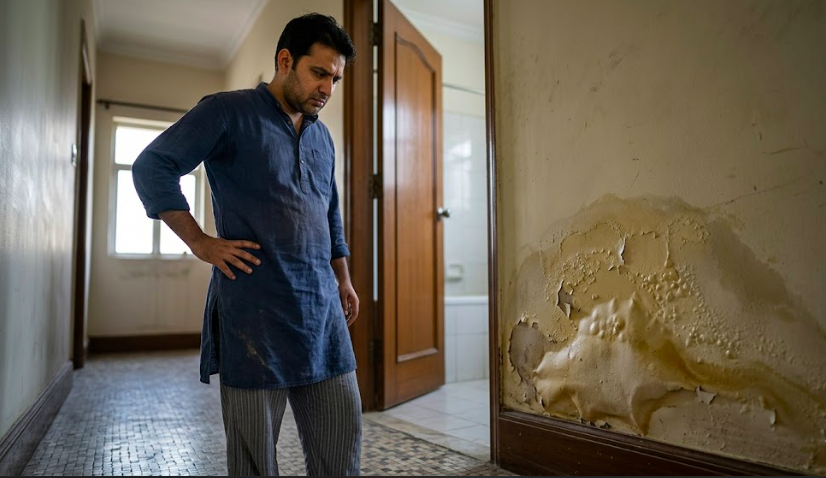
Hour 0–1: The First Moments Matter More Than You Think
The instant water makes contact with your home’s building materials, absorption begins. Most homes in America are built with materials that are highly porous by design drywall, wood framing, fiberglass insulation, carpet padding, and OSB subfloor all absorb water rapidly. Within the first 60 minutes:
- Drywall begins soaking up water through its paper facing and gypsum core. A single sheet of drywall can absorb several pounds of water before showing visible signs of saturation.
- Carpet and padding wick moisture up from the surface and down into the subfloor beneath. The padding the thick foam layer underneath your carpet acts like a sponge and holds water far longer than the carpet itself.
- Wood subfloor begins absorbing moisture from the bottom up if water reaches it through soaked padding, and from the top down if water sits directly on hardwood.
- Furniture legs and cabinetry begin drawing water into their base materials, beginning a swelling and staining process that often makes them unrestorable if not caught early.
During this window, mitigation is straightforward. A professional with a moisture meter, industrial extractors, and air movers can pull the water out, set up a drying system, and put the home on a path to complete recovery with minimal material loss.
Every hour of delay after this point narrows that path.
Hours 1–24: Invisible Damage Spreads Through Your Structure
In the hours after initial contact, water doesn’t stay where it landed. It migrates. It follows gravity and capillary action through every porous material it touches, traveling horizontally through walls, vertically down into floor assemblies, and upward into ceilings below a second-floor event.
What’s happening inside your walls
Wall cavities are dark, warm, and have almost no airflow the exact conditions that allow moisture to persist indefinitely. When water enters a wall, it soaks into the insulation, pools in the bottom of the wall cavity, saturates the wall plates (the horizontal wood framing at floor and ceiling level), and begins wicking up into the vertical studs. None of this is visible from the outside for days.
Homeowners often make the mistake of touching the drywall surface, finding it dry, and concluding the wall is fine. It is not. The surface paper may dry while the interior cavity remains saturated.
What’s happening beneath your floors
Water that reaches subfloor panels whether OSB or plywood begins the delamination process within hours. OSB subfloor, the most common material in homes built after the 1980s, is manufactured using compressed wood strands and adhesive that degrades rapidly when wet. Within 24 hours of sustained saturation, OSB begins to swell at its edges and lose its load-bearing integrity in the wettest sections.
Hardwood flooring above a wet subfloor will begin cupping the edges of each plank curl upward as the bottom absorbs more moisture than the top. In some cases, hardwood can be dried and re-nailed flat if caught at this stage. After 48 hours, the cupping typically progresses to buckling, at which point replacement is the only option.
What’s happening to your personal property
Upholstered furniture, mattresses, books, clothing, and electronics absorb moisture from the ambient air even if they aren’t directly in the water. In a room with standing water, relative humidity climbs toward 100%, and every porous surface in that space is absorbing moisture even without direct contact.
Hours 24–48: The Mold Clock Starts Ticking
This is the phase where the situation shifts from a drying job to a potential remediation job and the change is driven by biology, not construction.
Mold spores are present in every home. They float in the air at all times, land on every surface, and remain dormant until two conditions are met: a food source (organic material like drywall paper, wood, or carpet fiber) and moisture. Water damage satisfies both conditions simultaneously.
According to IICRC standards, mold germination begins within 24 to 48 hours of sustained moisture exposure on porous materials under typical indoor temperature conditions. In warm or humid environments and this is critical for homeowners in the Gulf Coast, South Texas, and the broader Sun Belt that window compresses. Higher ambient temperatures and pre-existing indoor humidity accelerate mold activation significantly. In humid climates where indoor relative humidity regularly exceeds 60%, mold can begin colonizing water-damaged materials in as little as 12 to 24 hours.
What mold colonization means practically
Early-stage mold (hours 24–48) is not yet visible to the naked eye, but under a microscope, hyphae the root-like structures of mold are anchoring into drywall paper and wood grain. Once hyphae establish, the surface can no longer simply be dried and treated. The contaminated material must be removed.
The IICRC’s standard is unambiguous on this point: materials that have sustained biological growth cannot be returned to “normal” condition through drying alone. The contamination requires physical removal and disposal.
At 48 hours, what was a $3,000–$5,000 water extraction and structural drying job now includes:
- Mold testing and air quality sampling ($200–$800)
- Containment barriers and negative air pressure with HEPA filtration
- Removal and disposal of contaminated drywall, insulation, and carpet
- Antimicrobial application to structural framing
- Rebuild of removed materials
Industry cost data consistently shows that mold remediation adds $4,000–$12,000 to a water damage project, depending on the affected square footage and the materials involved.
Hours 48–72: Structural Integrity Begins to Fail
By the 48–72 hour mark, the damage extends beyond surface materials into the structural skeleton of the home.
Wood framing swells and weakens
The wall studs, floor joists, and ceiling joists that hold your home together are wood and wood swells when it absorbs moisture. Swollen framing is mechanically weaker than dry framing, and the connections between structural members (particularly where joists meet rim boards and load-bearing walls) begin to loosen. In cases of significant flooding, visible signs of structural stress bowing walls, sagging floors can appear within 72 hours.
Subfloor and floor system compromise
A saturated OSB subfloor that hasn’t dried by the 72-hour mark typically reaches a point of no return. The adhesive bonds between wood strands begin failing, the panels lose their rated load capacity, and the only remediation path is full panel replacement. In rooms with significant subfloor failure, flooring, subfloor, and sometimes the top of the floor joist system below must all be removed.
Structural subfloor and floor system repair costs $5,000–$15,000 in moderate-size rooms, and can reach $30,000+ in larger-scale events.
Electrical systems become hazardous
Water and electricity are a serious safety combination. When water reaches your home’s electrical system outlets, junction boxes, switches, panel boards, or wiring it creates risks that don’t resolve on their own when things dry out. Water intrusion into electrical components can cause:
- Short circuits and arc faults that may not manifest for days or weeks after drying
- Corrosion of wiring connections that creates high-resistance junctions and fire risk
- Damage to outlet and switch internals that makes them unsafe to use even when they appear functional
The National Fire Protection Association and most state electrical codes require that any electrical components exposed to flooding be inspected and tested by a licensed electrician before the power to affected circuits is restored. Ignoring this step creates serious fire and electrocution risk.
Beyond 72 Hours: The Cascading Consequences
After 72 hours of untreated water damage, the project scope expands further still and the insurance picture becomes significantly more complicated.
Secondary damage accelerates
Mold colonies established at the 48-hour mark are now producing spores. Spore counts in the indoor air of the affected space rise, and mold begins colonizing adjacent materials spreading from wet drywall to dry drywall, from a flooded room to the crawlspace below, from a wall cavity to an HVAC return air duct that draws air through the wall.
Once mold enters an HVAC system, remediation must include the ductwork, which substantially increases both the scope of work and the cost.
Wood rot begins
Prolonged moisture exposure converts normal wood deterioration from a slow, years-long process into an accelerated one. Wood rot the breakdown of wood fiber by fungi can begin developing in structural framing within weeks of sustained moisture exposure if drying never occurred. Rotted wood has no structural value and must be sistered (reinforced with new framing alongside it) or replaced entirely.
Foundation and concrete are not immune
Water that reaches a home’s foundation either from exterior flooding or from a basement or crawlspace event begins a slow but serious erosion process. Water finding its way into concrete cracks expands those cracks through freeze-thaw cycles in northern climates and hydrostatic pressure in all climates. Over time, untreated foundation moisture leads to structural shifting, wall cracking, and in severe cases, partial collapse of below-grade spaces.
Foundation repair averages $4,000–$12,000 for moderate issues, and can reach $30,000 or more for full underpinning or stabilization.
The Insurance Clock: Why Delay Can Cost You Your Claim
Many homeowners are unaware that their insurance policy contains an implicit or explicit requirement to mitigate damage promptly after a water event. Insurers distinguish between “sudden and accidental” damage which is covered and damage that worsened due to the policyholder’s failure to act, which can be classified as neglect and denied.
The insurance industry standard, widely referred to as the 72-hour rule, holds that policyholders who fail to begin mitigation within approximately 72 hours of a water event risk having secondary damage (mold, structural deterioration, additional material loss) characterized as preventable neglect rather than covered loss.
Practical consequences of delayed claims:
- Mold as a secondary exclusion. Even when the underlying water damage is covered, most homeowners policies cap mold remediation at $10,000 or exclude it entirely if the insurer determines mold resulted from delayed reporting.
- Burden of proof shifts. When you report a water event days or weeks after it occurred, the adjuster cannot establish the original scope of damage with any certainty. The burden of proving what damage was sudden vs. progressive falls entirely on you.
- Full denial for neglect. If your insurer determines that a reasonable homeowner would have known about the water damage and failed to act, they may deny the entire claim not just the mold portion.
Documenting the event immediately, calling your insurer within 24 hours, and beginning professional mitigation as quickly as possible protects both your home and your claim.
For South Texas homeowners dealing with flash flood damage or storm-related water intrusion an increasingly frequent reality in the Rio Grande Valley connecting with a certified local restoration team quickly is especially critical. If you’re in the McAllen area, water damage restoration in McAllen TX is available with the rapid-response professional service that the 48-hour window demands.
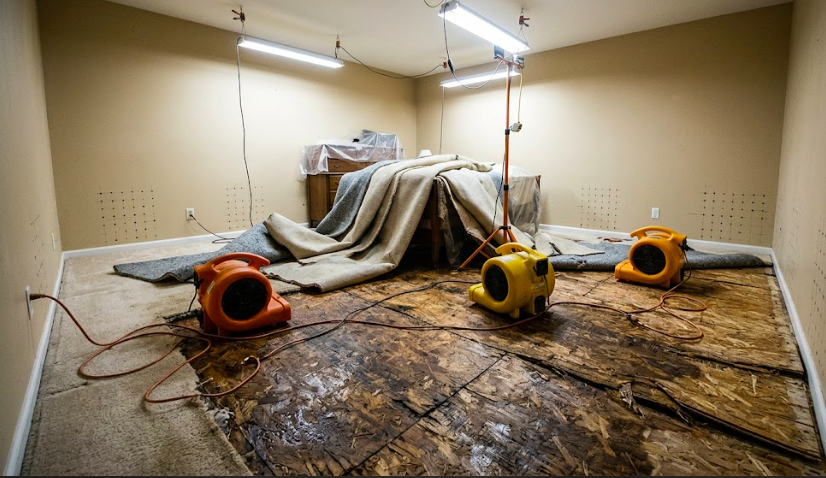
What to Do the Moment You Discover Water Damage
Acting immediately isn’t just about cost it’s about safety and preservability. Here’s the correct sequence:
1. Stop the water source first. If the damage is from a burst pipe, appliance failure, or fixture overflow, locate and shut off the water supply before anything else. The main shutoff is typically in the utility room, garage, or at the meter.
2. Cut power to affected circuits. If water has reached electrical outlets, switches, or any area near your electrical panel, turn off the circuit breakers for those zones before entering the space. Do not enter standing water in a room where power to that area hasn’t been cut.
3. Document everything before cleanup begins. Photograph and video the full extent of visible damage from multiple angles. Document your personal property, furnishings, and any structural damage you can see. This documentation is your foundation for an insurance claim.
4. Call your insurer and a restoration company at the same time. Don’t wait for the insurer to authorize work before calling a restoration company the 48-hour clock doesn’t pause for claims processing. Most policies allow you to begin emergency mitigation, and in fact, require it. A good restoration company will work directly with your adjuster.
5. Do not run fans or household dehumidifiers in sewage-contaminated spaces. Category 3 water (sewage backups, rising floodwater, water that has been sitting for 72+ hours) is biohazardous. Running fans in a contaminated space aerosolizes pathogens. Wait for professionals with HEPA-equipped equipment and proper PPE protocols.
6. Remove undamaged valuables from affected areas. Move furniture, rugs, electronics, and undamaged personal property out of wet areas to dry zones. Do not place valuables on top of wet carpet or furniture — contact moisture will damage them further.
The Real Cost of Waiting: A Side-by-Side Comparison
The financial case for immediate action is straightforward.
| Response timeline | Typical scope | Estimated cost range |
|---|---|---|
| Within 6 hours | Water extraction, structural drying, moisture monitoring | $1,500 – $4,000 |
| 6–24 hours | Above + elevated risk of material damage requiring replacement | $3,000 – $7,000 |
| 24–48 hours | Above + early mold colonization, drywall and flooring removal likely | $6,000 – $14,000 |
| 48–72 hours | Full mold remediation required, structural drying plus rebuild | $10,000 – $25,000 |
| 72+ hours | Mold remediation, structural repair, possible electrical work | $15,000 – $50,000+ |
These are not worst-case projections they represent the real-world cost escalation that restoration professionals see regularly. A single delayed weekend, a single “I’ll deal with it Monday” decision, can move a project from the first row of that table to the fourth.
Frequently Asked Questions
Can water damage dry out on its own if I open windows and run fans?
In very limited cases a small, contained spill on non-porous flooring in a climate-controlled environment ambient drying can be sufficient. In any situation involving drywall, subflooring, wall cavities, insulation, or significant volume of water, ambient drying is not adequate. Household fans cannot achieve the airflow rates required to dry wall cavities. Residential dehumidifiers cannot match the moisture extraction capacity of industrial units. Professional structural drying equipment is categorically different from what homeowners have access to, and the monitoring required to confirm complete drying requires professional-grade moisture meters and thermal imaging.
What if I can’t see mold yet does that mean there isn’t any?
No. Mold colonization begins at the microscopic level and is not visible to the naked eye until colonies reach a certain density, typically 3–7 days after initial germination depending on conditions. The absence of visible mold at 48 hours does not mean mold has not begun growing in materials that have been wet since the event.
My water damage is from a “clean” source like a supply line does the 48-hour rule still apply?
Yes. Clean water (Category 1 in IICRC classification) that remains undried for more than 24–48 hours can reclassify to Category 2 as microbial activity begins in saturated materials. The source contamination level at the moment of entry does not determine the contamination level at the 72-hour mark if drying hasn’t begun.
Will my homeowners insurance cover water damage?
Standard homeowners insurance typically covers sudden and accidental water damage burst pipes, appliance failures, and roof leaks that introduce water suddenly. It generally does not cover gradual damage, seepage, or flood damage from rising exterior water (which requires a separate NFIP or private flood policy). Critically, coverage for mold resulting from a covered water event is often capped or conditional on prompt mitigation. For authoritative information on what NFIP flood insurance covers, the FEMA FloodSmart program provides homeowner-facing guidance on policy types and coverage limits.
Conclusion: 48 Hours Is Not a Margin for Error
The science, the insurance standards, and the real-world cost data all point in the same direction: the first 48 hours after water damage are the most important hours in the entire restoration process. Every hour in that window either holds the damage where it is or lets it expand into a more expensive, more dangerous, and harder-to-recover-from situation.
The EPA and the IICRC set the 48-hour standard because it reflects the biological reality of mold and mold is just one of the multiple destructive processes active in a wet structure. Structural deterioration, electrical hazard development, and insurance claim vulnerability all operate on the same compressed timeline.
If you have water in your home right now, the time to act is not when it’s convenient it’s immediately.
For comprehensive guidance on how ProTrust Water Damage Restoration works and what professional mitigation involves, the IICRC’s consumer education resources provide detailed information on industry standards and what to expect from a certified restoration company.
Leave a Reply