
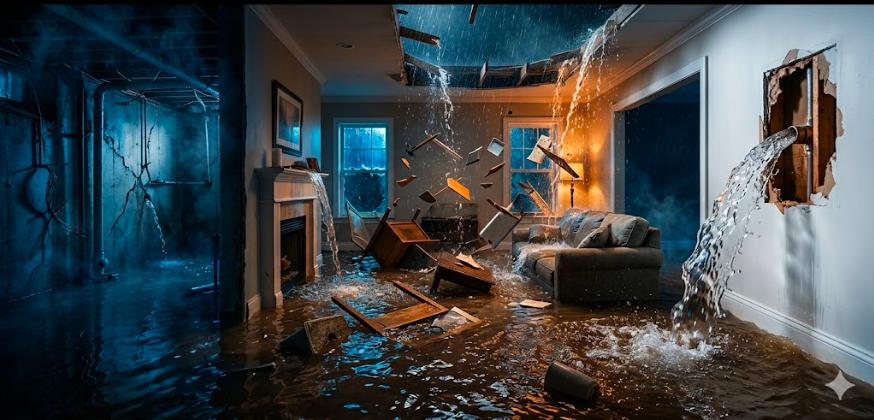
Water damage is water damage, right? Wrong. After years in the restoration industry, one of the most common and costly misconceptions homeowners hold is that all flooding is treated the same way.
In reality, a basement flood caused by groundwater, a storm flood from heavy rain or hurricane runoff, and a pipe burst inside your walls are three fundamentally different problems. Each carries unique contamination risks, requires different drying equipment and timelines, and is treated differently by your homeowner’s insurance policy.
This guide breaks down exactly how restoration professionals approach each scenario so if disaster strikes, you know what to expect and how to advocate for your home.
Table of Contents
- Understanding Water Categories: The Foundation of Restoration
- Basement Flood Restoration
- Storm Flood Restoration
- Pipe Burst Restoration
- Side-by-Side Comparison
- How Insurance Treats Each Type
- Mold Risk: Which Is Most Dangerous?
- What to Do First No Matter the Cause
Understanding Water Categories: The Foundation of Restoration
Before any restoration professional touches a single square foot of your home, they assess which IICRC water category applies. The IICRC S500 Standard for Professional Water Damage Restoration classifies water damage into three categories based on contamination level:
- Category 1 (Clean Water): Water from a clean supply line, broken appliance supply hose, or overflowing clean sink. Poses no immediate health threat.
- Category 2 (Gray Water): Water containing some contamination washing machine overflow, toilet water without feces, dishwasher leaks. Can cause illness if ingested or if skin is exposed for extended periods.
- Category 3 (Black Water): Grossly contaminated water sewage, floodwater that has contacted soil, storm runoff. Contains pathogens, bacteria, and chemicals that pose serious health risks.
Basement Flood Restoration
Groundwater / Hydrostatic Pressure
A basement flood is typically caused by one of several mechanisms: hydrostatic pressure pushing groundwater through foundation cracks, a failed sump pump, a backed-up floor drain, or water intrusion through window wells. In Texas, heavy rain events can saturate the soil rapidly, creating intense pressure against basement and crawl space walls.
Water category: Usually Category 2–3
Because basement floodwater has traveled through soil, it carries bacteria, pesticides, fertilizers, and trace sewage from the surrounding ground. Even if it looks clean, it is not. Restoration professionals treat basement flooding as Category 2 at minimum, and Category 3 if any sewage system backup is involved.
What restoration looks like
- Source control first: Before drying can begin, professionals identify and seal the entry point whether that’s a foundation crack, a compromised sump pit, or a failed drainage tile. There’s no point drying if water keeps coming in.
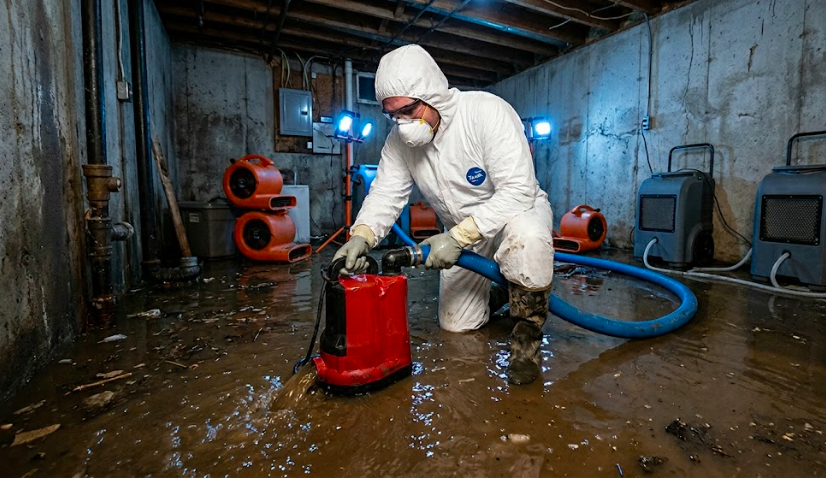
- Submersible pumps: Truck-mounted extraction units or submersible pumps remove standing water. In serious floods, this alone can take several hours.
- Antimicrobial treatment: Because of soil contamination, all affected surfaces concrete, drywall, wood framing are treated with EPA-registered antimicrobials before drying begins.
- Structural drying: Commercial-grade dehumidifiers and air movers are positioned to dry the structure from the inside out. Moisture meters and thermal imaging cameras track progress inside walls and under flooring.
- Timeline: 3–7 days for drying, depending on saturation level and materials affected.
Storm Flood Restoration
Category 3 Black Water Always
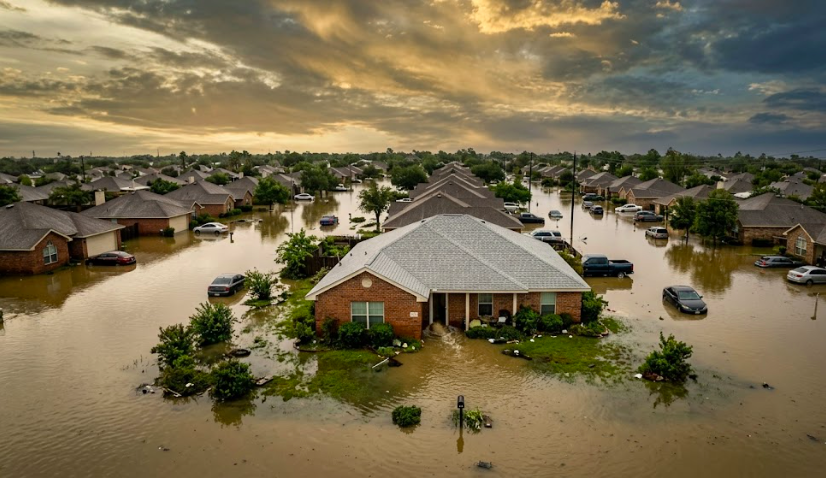
Storm flooding caused by hurricanes, flash floods, overflowing rivers, or tropical weather systems is categorically the most hazardous type of water damage. This is especially relevant in South Texas, where cities like McAllen regularly face heavy rainfall events and tropical storm activity from the Gulf of Mexico.
Storm floodwater is classified as Category 3 Black Water without exception. By the time it enters your home, it has swept across roads, parking lots, agricultural fields, and drainage infrastructure collecting motor oil, agricultural chemicals, raw sewage from overwhelmed municipal systems, and biological matter along the way.
What restoration looks like
- Full PPE protocol: Crews wear N95 respirators, full coveralls, and waterproof gloves. This is non-negotiable.
- Aggressive demolition: Porous materials drywall, insulation, carpet, padding that have contacted Category 3 water cannot be dried and saved. They must be removed and discarded. This is called a “demo-dry” approach and is required to prevent mold and bacterial growth.
- Content triage: Soft furnishings, mattresses, and contaminated personal items are almost always a total loss. Hard, non-porous items (glass, metal, sealed hardwood) can often be sanitized.
- Extended drying phase: After demolition, the remaining structural components concrete slabs, wood framing, subfloor require aggressive drying, often 5–10 days or more.
- Air quality testing: After drying, professionals may conduct air quality tests before reconstruction begins to confirm no residual mold spores or contaminants are present.
McAllen homeowners: If your home experienced flooding from a storm, work with a licensed restoration company that understands South Texas weather patterns and local building codes. The team at McAllen TX Water Damage specializes in storm and flood restoration across the Rio Grande Valley and can respond quickly after major weather events.
Pipe Burst Restoration
Category 1 But Time-Sensitive
A burst pipe is typically the “cleanest” type of water damage but don’t let that fool you into complacency. A pipe carrying pressurized clean water can release hundreds of gallons in a matter of hours, saturating walls, ceilings, subfloors, and insulation before the homeowner even realizes something is wrong.
Pipe bursts happen for several reasons: freezing and thawing cycles (less common in McAllen but possible during rare cold snaps), aging pipes (galvanized steel and polybutylene are especially prone), high water pressure, physical damage, or corrosion.
What restoration looks like
- Immediate shut-off: The first step is always shutting off the main water supply. Every homeowner should know where their main shut-off valve is located before an emergency occurs.
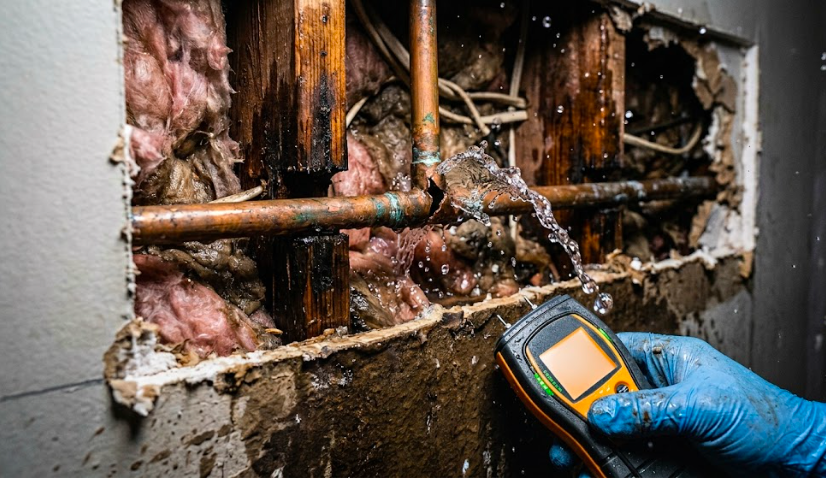
- Moisture mapping: Pros use infrared thermal cameras and moisture meters to find exactly where water has traveled often far from where it entered. Water travels along framing, inside wall cavities, and under flooring in ways that aren’t visible to the eye.
- Targeted extraction: Unlike a floor full of standing water, pipe burst damage often requires extracting water from inside walls and beneath floors using specialized injection drying systems and floor mat drying equipment.
- Controlled drying environment: Because the water is clean, less demolition is typically required. Pros often use “in-place drying” a technique where drying holes are drilled in drywall to push heated dry air into wall cavities without removing the drywall entirely.
- Plumbing repair coordination: Restoration companies often coordinate directly with licensed plumbers to ensure the broken pipe is properly repaired as part of the overall project.
- Timeline: 2–5 days in most cases, assuming the damage is caught early.
Side-by-Side Comparison
| Factor | Basement Flood | Storm Flood | Pipe Burst |
|---|---|---|---|
| Water Category | Category 2–3 | Category 3 (always) | Category 1 (initially) |
| Contamination Risk | Moderate to High | Very High | Low (if treated quickly) |
| Demo Required? | Partial | Extensive | Minimal (if caught early) |
| Typical Drying Time | 3–7 days | 5–10+ days | 2–5 days |
| Equipment Used | Pumps, dehumidifiers, air movers, antimicrobials | Pumps, full PPE, negative air machines, antimicrobials | Moisture meters, injection drying, mat drying systems |
| Mold Risk | High | Very High | Moderate |
| Insurance Coverage | Usually NOT covered by standard policy | Requires separate flood insurance (NFIP) | Usually covered by standard homeowner’s policy |
| Average Restoration Cost* | $3,000–$10,000+ | $8,000–$50,000+ | $1,500–$8,000 |
How Insurance Treats Each Type
This is where the difference between flood types becomes genuinely consequential for your wallet. Many homeowners are shocked to discover their standard homeowner’s policy does not cover all water damage equally.
Pipe burst: Usually covered
Sudden, accidental discharge from a broken pipe is generally covered under standard homeowner’s insurance as a “sudden and accidental” loss. However, if the adjuster determines the pipe failed due to lack of maintenance or if the damage was “slow and gradual” (a slow leak ignored for months), the claim may be denied. Document the damage immediately and call a professional before cleanup to preserve your claim.
Basement flooding: Tricky territory
Whether your basement flood is covered depends heavily on the cause. Water that backed up through a drain or sump pump failure may be covered under a water backup rider but only if you added that endorsement to your policy. Standard homeowner’s policies exclude it by default. Groundwater seeping through foundation cracks is almost never covered.
Storm flooding: Requires separate flood insurance
Standard homeowner’s insurance policies explicitly exclude flood damage from storm surge, rising water, or overland flooding. To be covered, you need a separate flood insurance policy through the National Flood Insurance Program (NFIP) or a private flood insurer. In flood-prone areas of South Texas, this coverage is strongly recommended and sometimes required by mortgage lenders in designated flood zones.
Mold Risk: Which Type of Flood Is Most Dangerous?
Mold can begin growing within 24 to 48 hours of any water intrusion, according to the U.S. Environmental Protection Agency. But not all flood types create equal mold risk.
Storm floods carry the highest mold risk because the combination of contaminated water, organic debris (soil, leaves, sewage), and saturated structural materials creates an ideal environment for multiple mold species to establish simultaneously. Demolishing affected materials quickly is not just best practice it’s essential for stopping mold before it spreads to unaffected areas.
Basement floods present a significant mold risk because the enclosed, often poorly ventilated space of a basement retains humidity long after standing water is removed. Concrete is porous and holds moisture deep in its structure. Even after surface drying, moisture content inside concrete walls can remain elevated enough to sustain mold growth for weeks.
Pipe bursts have a lower mold risk but only if restoration begins within the first 24 hours. A burst pipe discovered late (say, after a vacation) with water sitting for several days is effectively a mold situation already, requiring full remediation protocols.
What to Do First No Matter the Cause
Regardless of which type of water damage you’re facing, these steps are universally correct in the immediate aftermath:
- Ensure safety first. Don’t enter any space with standing water if there is any possibility of electrical hazards. Shut off power at the breaker if safe to do so.
- Stop the water source. For pipe bursts, shut off the main water supply. For storm flooding, there’s nothing to shut off focus on keeping people safe and documenting.
- Call a licensed restoration company. Do this before calling your insurance company. Professionals can document the damage properly, which actually strengthens your claim. They also prevent you from making costly cleanup mistakes (like using a shop vac on Category 3 water without PPE).
- Document everything. Take photos and video of every affected area before anything is moved or removed. Your insurance company will require this documentation.
- Do not use standard fans or household dehumidifiers. These are insufficient for structural drying and can actually spread contamination in Category 2 or 3 situations by moving contaminated air throughout the home.
- Notify your insurance company. After you’ve called a professional and documented the damage, file your claim promptly. Most policies have a notification window.
Dealing with water damage in the McAllen area?
The type of flooding determines everything about how it’s restored. Get a rapid assessment from certified professionals who understand South Texas water damage .Get a Free Assessment →
Conclusion
Basement floods, storm floods, and pipe bursts look similar on the surface there’s water where there shouldn’t be but the restoration response for each is fundamentally different. The contamination level, the equipment needed, the demolition scope, the drying timeline, and the insurance implications all vary based on the source of the water.
The most important thing a homeowner can do is act fast and work with a certified restoration professional who will correctly classify the damage and follow IICRC standards for their specific situation. Cutting corners on water damage restoration using the wrong techniques for the wrong category of water leads to mold, structural failure, and insurance complications down the road.
If you found this article helpful, it was written in partnership with the team at ProTrust Water Damage Restoration a nationally trusted resource for homeowners navigating water damage recovery.
Leave a Reply