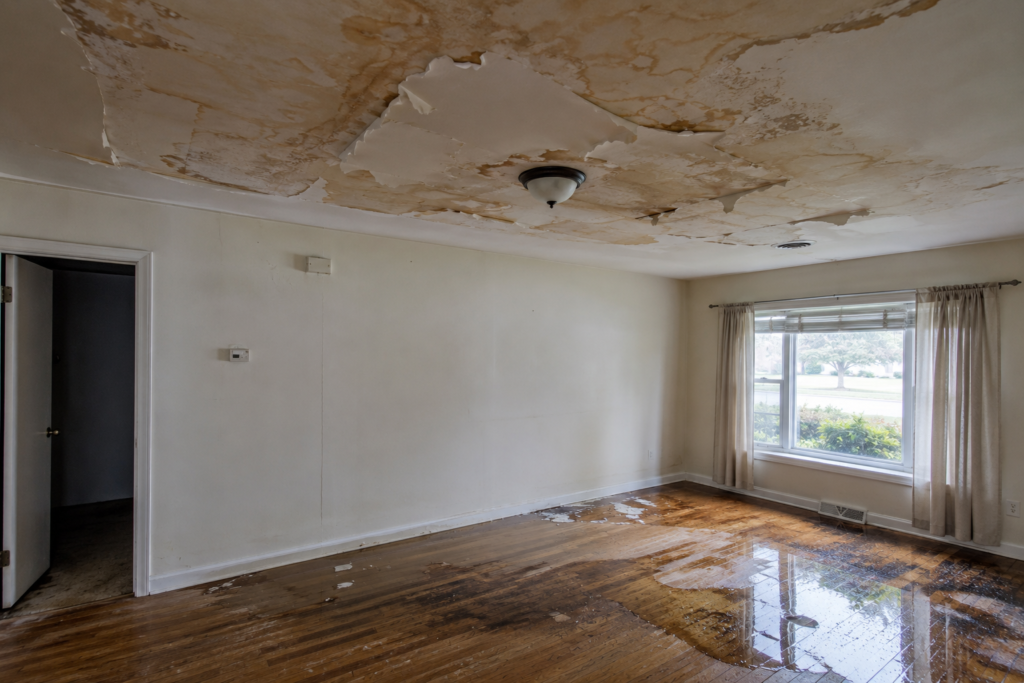
Water damage rarely gives a warning. A burst pipe at 2 AM, a washing machine hose that fails while you’re at work, a storm that finds the one weak point in your roof – these events happen suddenly, and what you do in the hours immediately afterward determines whether you’re dealing with a manageable repair or a months-long restoration project involving mold, rot, and structural damage.
The biggest mistake homeowners make is treating water damage as a single event that ends once the visible water is gone. In reality, water damage is a process that continues silently inside your walls, floors, and structural framing long after the surface appears dry – and addressing only what you can see leaves the most expensive part of the problem completely unresolved.
This guide walks through exactly what to do when water damage occurs, what’s happening inside your home that you can’t see, and what a complete professional restoration process actually involves from first call to final repair.
The Most Common Sources of Water Damage
Water damage comes from a wide range of sources, each with different risk profiles and response requirements:
- Burst and leaking pipes: Frozen pipes that crack, corroded supply lines, and failed fittings behind walls release water rapidly – sometimes hundreds of gallons before the source is identified and stopped.
- Appliance failures: Washing machines, dishwashers, refrigerator ice makers, and water heaters all have connections that fail over time, often releasing significant water volumes before anyone notices.
- Roof leaks: Missing shingles, damaged flashing, and deteriorated underlayment allow rain and snowmelt to penetrate the roof deck, traveling through attic insulation and ceiling joists long before becoming visible inside the home.
- Basement flooding: Heavy rainfall, sump pump failure, and foundation cracks all allow water to enter basement spaces, saturating concrete, framing, and stored belongings.
- Sewage backups: Overwhelmed municipal systems or blocked drain lines can push sewage back through floor drains and toilets, creating a contaminated situation requiring specialized handling.
- HVAC condensate leaks: Clogged or cracked condensate lines allow water to accumulate inside wall cavities and ceilings without any visible external warning sign.
What Water Does to Your Home – Hour by Hour
Most homeowners significantly underestimate how quickly water damage progresses. Here is the realistic timeline of what happens inside your home from the moment water intrusion begins:
- 0 to 1 hour: Water saturates porous materials on contact. Drywall begins absorbing moisture through its paper facing. Wood flooring starts swelling at seams and edges. Furniture in contact with water begins to warp.
- 1 to 6 hours: Water wicks upward through drywall well above the visible waterline. Subfloor panels absorb moisture and begin to swell. Metal fixtures and fasteners in contact with water start to oxidize.
- 6 to 24 hours: Drywall paper begins separating from its gypsum core. Wooden structural members – studs, joists, subfloor sheathing – have absorbed significant moisture. A musty odor begins developing as biological activity starts.
- 24 to 48 hours: Mold growth begins on wet surfaces. This is the critical threshold – under normal indoor conditions, mold spores that are already present in virtually every home begin actively colonizing wet building materials within this window.
- 3 to 7 days: Mold spreads beyond the originally affected area. Wood rot begins in heavily saturated framing. Damage extends into adjacent rooms as moisture migrates through shared structural elements.
- Beyond one week: Structural repairs become necessary in addition to restoration. Mold remediation becomes a major separate undertaking. Total repair costs multiply significantly compared to what immediate professional response would have cost.
Immediate Steps to Take When Water Damage Occurs
The first hour after discovering water damage is the most important window for limiting total damage:
- Step 1 – Stop the water source if possible: Shut off your main water supply for pipe failures, or disconnect the failing appliance. For roof or groundwater intrusion, focus on containment and documentation instead.
- Step 2 – Cut electricity to affected areas: Switch off circuits serving any area where water is present at the breaker box before entering. Water near electrical components is a serious safety hazard.
- Step 3 – Document everything before cleanup: Photograph and video all visible damage, water levels, and the apparent source before anything is moved or cleaned. This documentation is essential for your insurance claim.
- Step 4 – Relocate valuables immediately: Move electronics, furniture, documents, and important belongings out of the affected area as quickly as possible.
- Step 5 – Remove surface water if it’s safe: Use a wet-dry vacuum or towels to remove standing water while waiting for professional help. Every gallon removed reduces how deep moisture penetrates into structural materials.
- Step 6 – Call for professional emergency response: Visit emergency water extraction right away – professional-grade extraction equipment removes water and begins addressing structural moisture far more effectively and quickly than anything available to a homeowner.
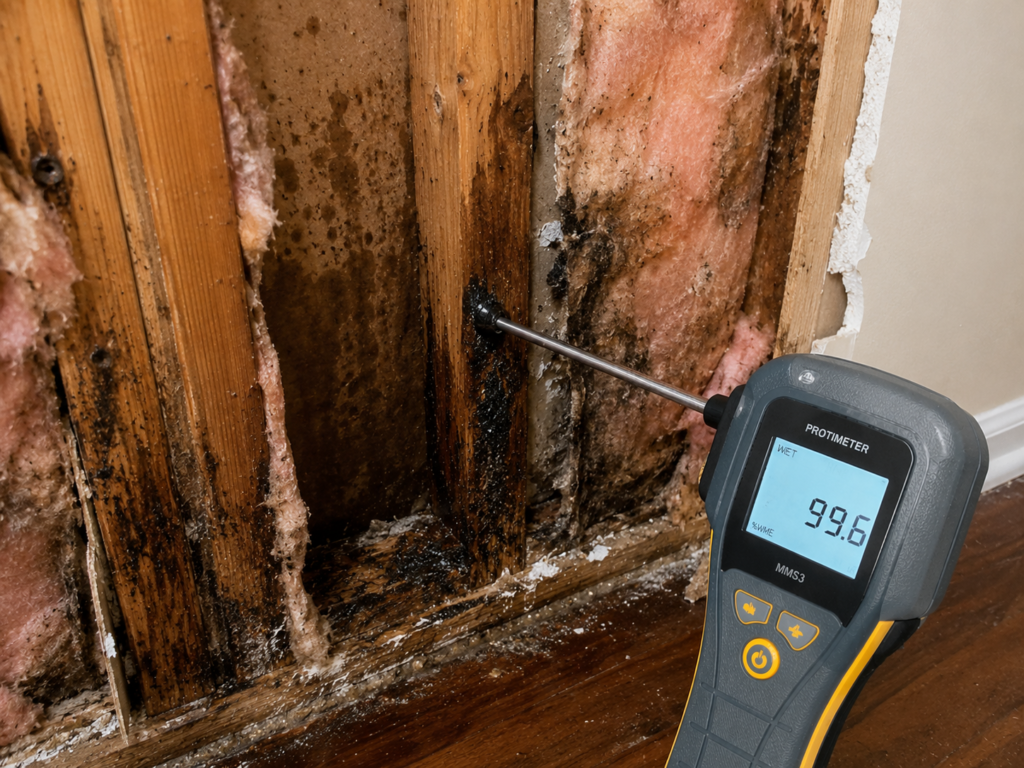
Moisture meter reading on wet wall studs behind removed drywallWhy Surface Cleanup Is Never the Full Solution
This is the single most important concept to understand about water damage. Mopping up visible water and running household fans addresses only the surface. It does nothing about:
- Moisture absorbed into concrete floors and walls that continues releasing as humidity for days
- Water trapped inside wall cavities between drywall and exterior sheathing
- Saturated insulation holding moisture against wooden framing and blocking natural drying
- Subfloor panels that have absorbed water through their full thickness
- The elevated humidity inside enclosed spaces that sustains the exact conditions mold requires to establish and spread
According to the U.S. Environmental Protection Agency (EPA), mold begins growing on wet building materials within 24 to 48 hours of water exposure. Once mold establishes inside walls or under flooring, remediation becomes a significantly larger and more expensive project than the original water damage restoration would have been.
A complete flood damage restoration addresses the full scope of what water actually did to your home – not just the part you can see – using professional equipment specifically designed to find and dry hidden moisture before it becomes a much bigger problem.
What Professional Restoration Actually Involves
Professional water damage restoration is a structured, monitored process. Here is what it includes from start to finish:
- Moisture mapping with thermal imaging: Technicians use infrared cameras and professional moisture meters to identify every pocket of hidden dampness inside walls, under floors, and within structural cavities that is invisible to the naked eye.
- Industrial water extraction: Truck-mounted and portable extraction equipment removes standing water far more effectively than any consumer wet-dry vacuum, pulling moisture out of carpeting, concrete, and structural materials.
- Structural drying: This is the heart of the structural drying process – commercial air movers and dehumidifiers are strategically placed throughout the affected area, with daily moisture readings tracking progress until all materials reach established safe dryness levels, not just until things feel dry to the touch. If your water damage occurred near the Boise, Idaho area, the team at Boise ID Water Damage provides this exact level of professional structural drying with 24/7 emergency response.
- Antimicrobial treatment: All affected surfaces receive treatment to eliminate bacteria and prevent mold growth before spaces are closed back up.
- Repairs and final restoration: Damaged drywall, flooring, insulation, and finishes are repaired or replaced, returning your home to its pre-damage condition.
What If Mold Has Already Developed?
If water damage went unaddressed for more than 48 hours, or if you’re noticing a musty odor, visible spotting, or discoloration on walls and belongings, mold may have already established itself. At this stage, drying alone is no longer sufficient.
A professional mold inspection and removal service involves containing the affected area to prevent spore spread, safely removing and disposing of contaminated materials, treating remaining surfaces with antimicrobial solutions, and verifying through testing that the space is genuinely safe afterward. This is not a project for DIY cleaning products – improper handling can spread spores throughout your home and create real health risks, particularly for anyone with respiratory sensitivities.
Does Your Insurance Cover Water Damage?
Coverage depends heavily on the cause and circumstances:
- Sudden and accidental damage is typically covered: Burst pipes, appliance failures, and sudden roof leaks are generally covered under standard homeowner’s insurance policies.
- Gradual leaks are typically not covered: If an adjuster determines the damage resulted from a slow, ongoing leak that should have been noticed earlier, the claim is likely to be denied.
- External flooding requires separate coverage: Standard homeowner’s policies do not cover flooding from outside sources. This requires separate flood insurance through FEMA’s National Flood Insurance Program.
Document everything immediately, report to your insurer promptly, and work with a restoration company that provides detailed damage documentation – this consistently improves claim outcomes.
Preventing Future Water Damage
These maintenance steps significantly reduce your risk of future water damage events:
- Inspect your roof twice a year for missing shingles, damaged flashing, and any soft spots that indicate existing moisture problems.
- Test your sump pump every spring to confirm it activates correctly and the discharge pipe is clear.
- Replace appliance supply lines every 5 years regardless of visible condition – rubber hoses degrade internally before showing external wear.
- Check water heater connections annually, including the pressure relief valve.
- Keep gutters clean and downspouts extended at least six feet from your foundation.
- Know your main water shutoff location – every adult in the household should be able to operate it within sixty seconds.
Final Thoughts
Water damage is never just about the water you can see. The moisture that’s already traveled deeper into your walls, floors, and structural framing is what determines whether your home fully recovers or develops chronic problems that resurface for years. Fast action, professional extraction, and complete structural drying are not optional extras – they are the difference between a manageable repair and a much larger, more expensive restoration project.
Don’t wait for visible damage to tell you the full story. Act quickly, document everything, and get professional help on site as soon as possible after any water damage event.
Leave a Reply